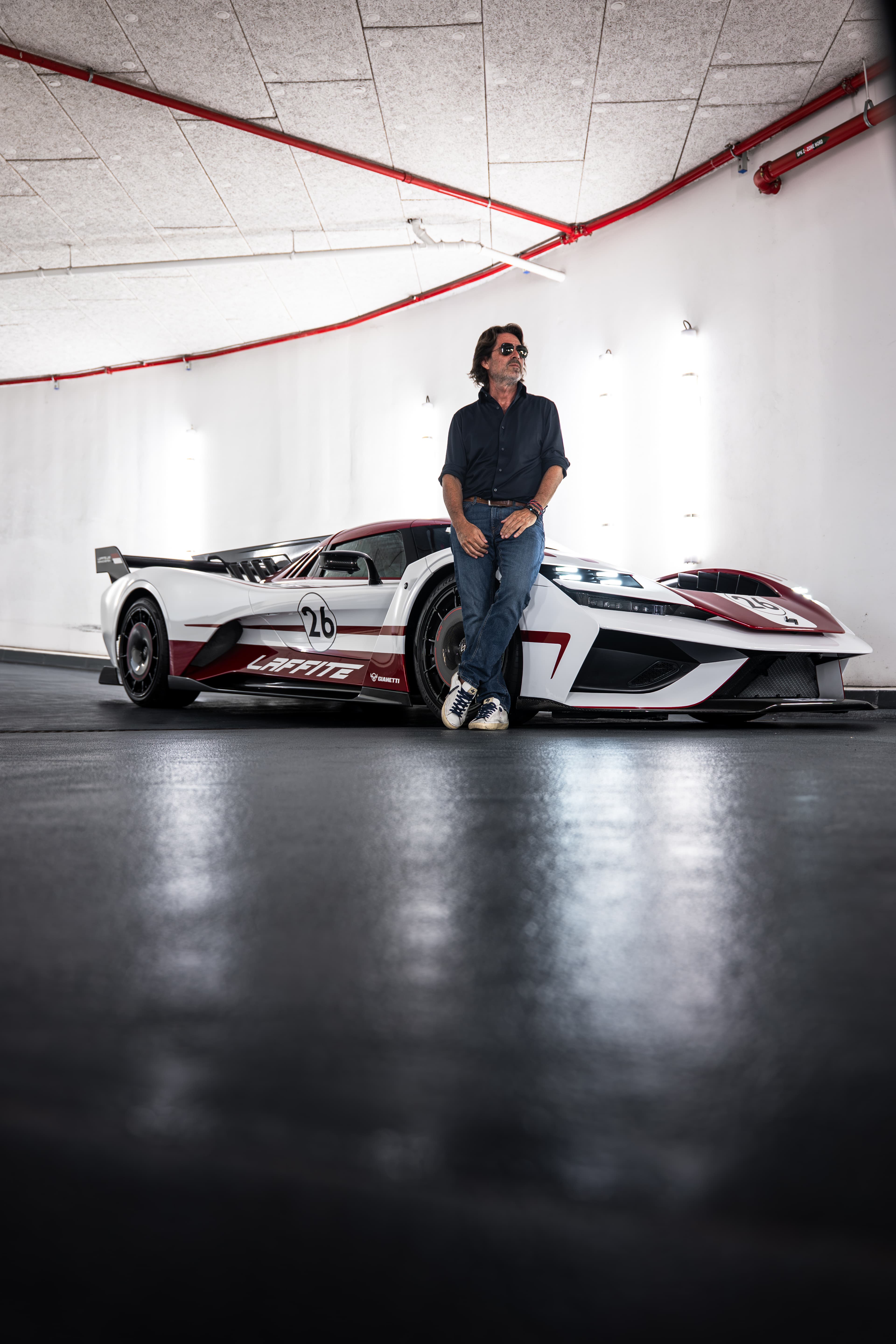
Champion of the Val-de-Marne: fifteen years on court before the track
From early childhood until eighteen, Bruno Laffite grew up inside a tennis club his family treated as its country house. He left it as departmental champion, and with a way of reading the game he never lost.
Before the circuits, there was the court. From early childhood until he was eighteen, Bruno Laffite grew up inside a tennis club in the Val-de-Marne that his family treated as its country house. He left it as champion of the department, and with a way of watching an opponent that never left him.
A country house with no countryside
Some childhoods unfold in a garden. This one played out on a rectangle bounded by wire fencing, somewhere south-east of Paris. His parents had no weekend place. They had a club. You arrived on Saturday morning and left on Sunday evening, and in between there were the courts, the clubhouse and the other families.
The phrase he still uses for it, the family's country house, says precisely what needs saying. Tennis was not an activity pencilled into a schedule, it was a permanent backdrop. A child who grows up in a club does not play tennis, he lives inside it. The distinction is not cosmetic, and it explains a good deal of what came later.
From his earliest years until eighteen, the rhythm never broke. Winters, exams and adolescence all failed to thin it out. The Val-de-Marne title, won in a department thick with players, was therefore no accident. It was the arithmetic consequence of fifteen years spent on the same few square metres.
Reading the game before it arrives
Competitive tennis teaches one thing spectators never see: you do not play the ball coming at you, you play the one after it. The opponent's swing, the angle of his shoulders, the height of his ball toss on serve, all of it is information available a fraction of a second before impact. The player who processes it buys time the player who absorbs it will never get back.
That is exactly the skill a cockpit demands. A driver looking at the corner he is in is already late. He looks at the next one, calculates the line of the car ahead, infers a rival's braking point from the way that car behaved a lap earlier. Reading always precedes doing.
Footwork is the second transfer, and the less obvious one. A forehand is not made with the arm, it is made with the feet planted two metres and half a second earlier. Position produces the stroke. In racing the hierarchy is identical: the exit of a corner is decided at the entry, and a driver badly placed under braking will never recover with the pedal what he gave away on the line.
“On a court you learn very early that a point is not won at the moment you win it. It is won three shots before.”
The decisive point
Then there is the nerve. Tennis has the particular cruelty of isolating the player: no team, no bench, no timeout in which to gather yourself. At five games to four, serving, there is nobody to pass the ball to. The hand shakes or it does not, and the result is public.
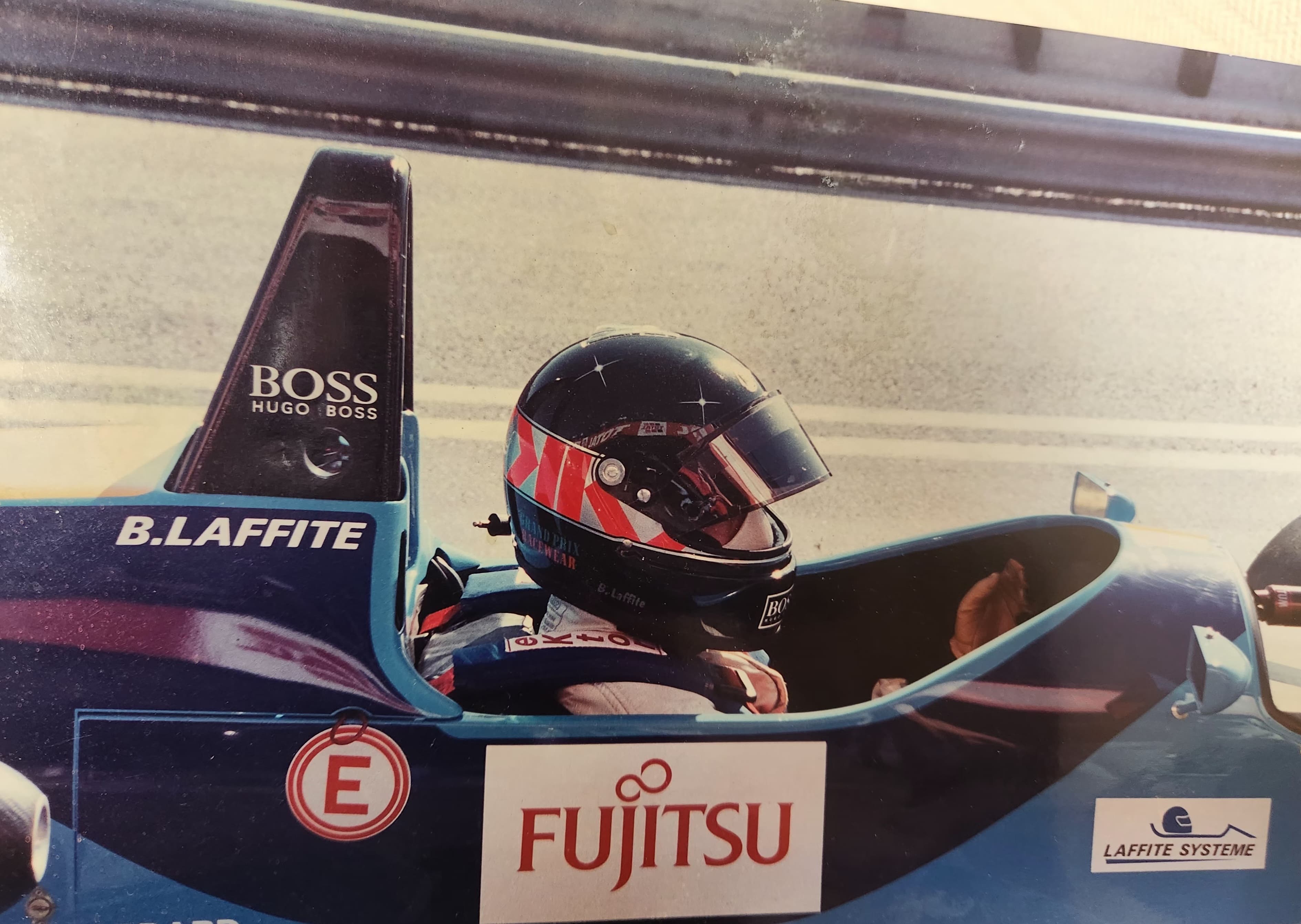
A driver finds that solitude intact. The helmet closes a space no help can enter. Qualifying above all reproduces the mechanics of the decisive point: one opportunity, one time on the sheet, no second chance before the flag. Bruno Laffite came to motor racing at twenty with the habit already installed, the habit of functioning normally at the precise moment when nothing else is.
He left the club at eighteen without ever making tennis a profession. It was not an abandoned career but a completed education: fifteen years of repetition, of rankings, of matches lost in a third set. By the time the first car arrived, the essential part was already there.
Invite Bruno Laffite to tell the behind-the-scenes at your event.