From Paris to Monaco: the through-line of a life run like a race
Born in Paris in 1970, racing at twenty, running businesses at twenty-five, building hypercars out of Monaco: nothing in Bruno Laffite's path is accidental. All of it comes down to method.
Some lives read like a racing line: a starting point, a long sequence of corners, and a shape that only reveals itself at the end. Bruno Laffite's runs on a single thread, stretched from Paris to Monaco.
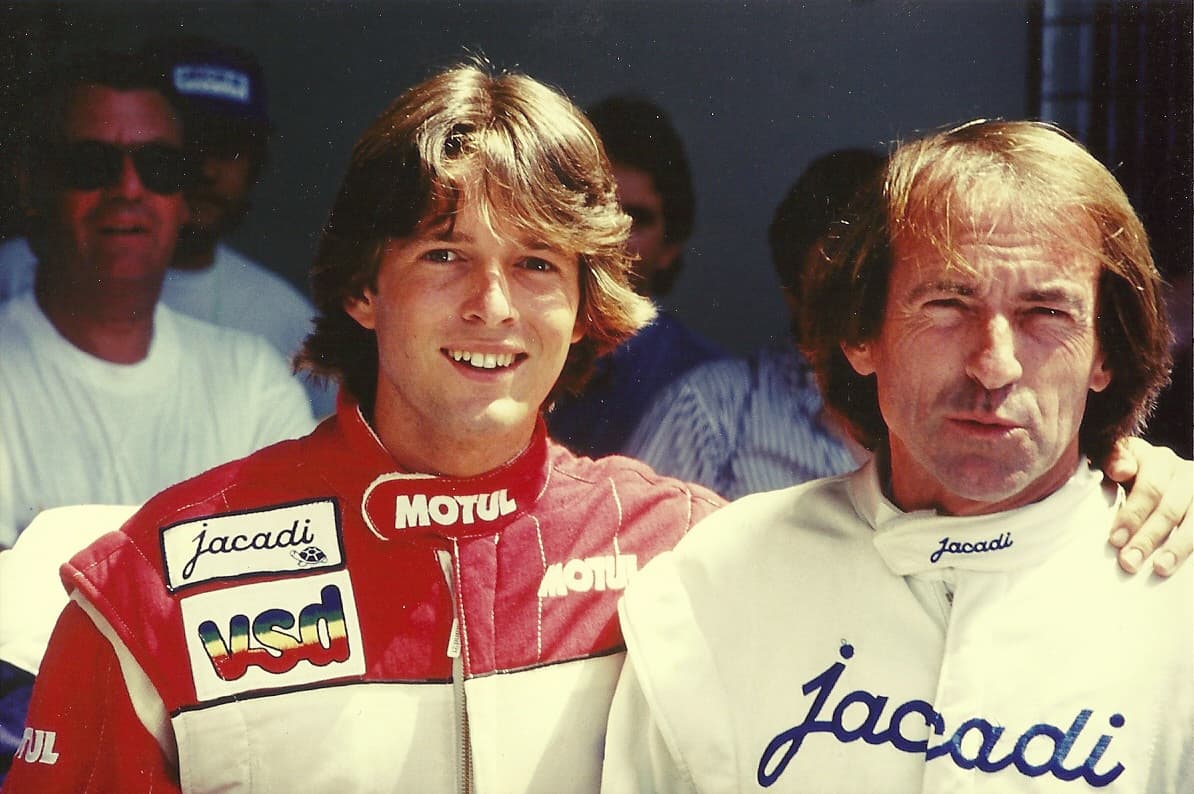
He was born in Paris on 1 December 1970. His mother, a former air hostess, left the sky behind to raise him. His father, Dominique Laffite, ran a car dealership in the capital and entered a small rally team in the Rallye Monte-Carlo. His father's brother was Jacques Laffite: 177 Grands Prix, six wins, thirty-three podiums, most of them with Ligier. The boy grew up between two versions of the same world, the workshop and the paddock.
A schooling in gesture
What stands out in this story is not speed. It is repetition. At six he took up the piano, and has never stopped playing. At the same age he discovered Grands Prix on French television, which began broadcasting them in 1976. The tennis club, in his own words, became the family's country house: he spent his days there until he was eighteen, and became champion of the Val-de-Marne.
Three disciplines, one grammar: anticipate, correct, begin again. After the baccalauréat came business school, l'École des cadres at La Défense, where he crossed paths with a student two years ahead of him, Pascal Cohen. Neither could have guessed that the meeting would matter again three decades later.
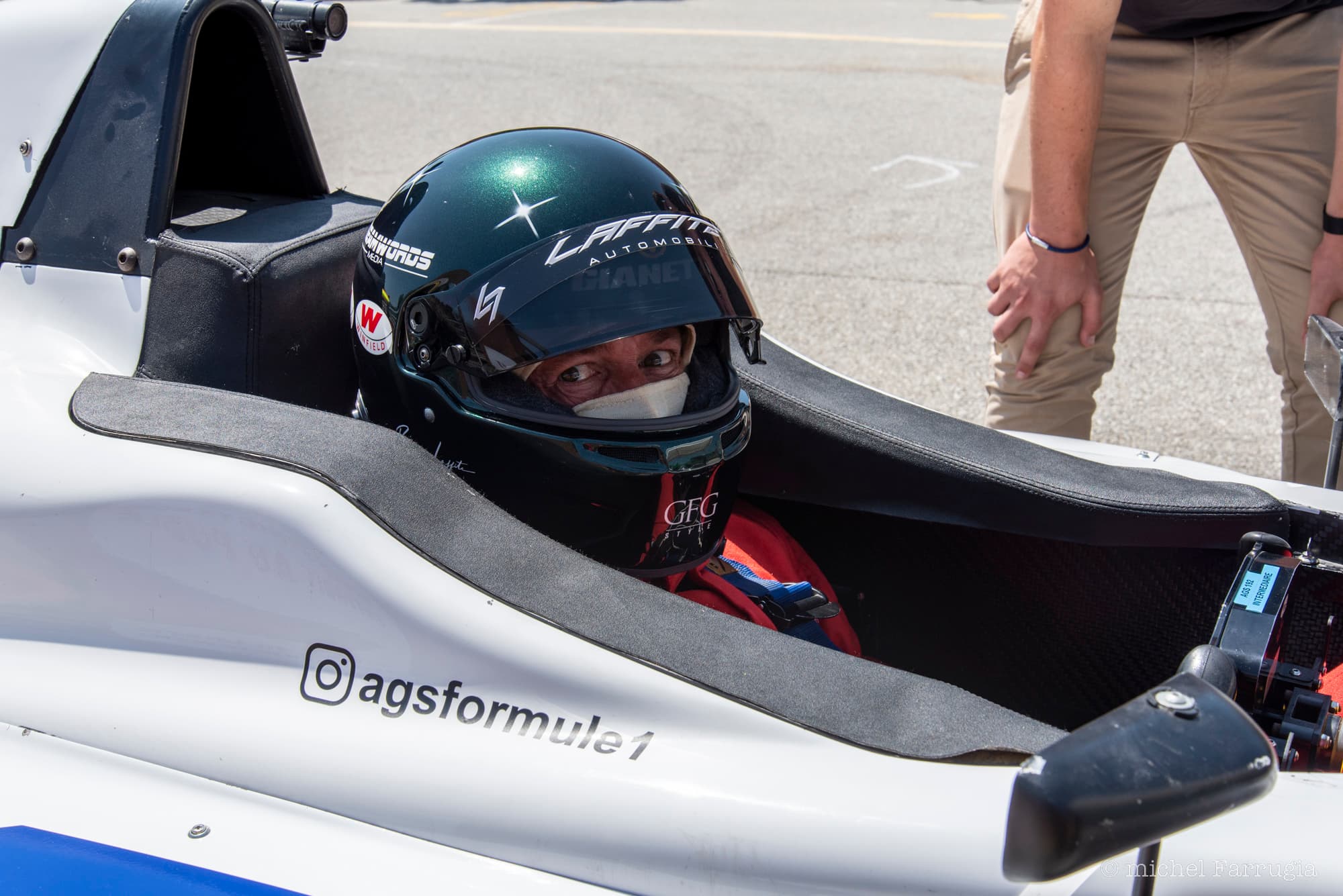
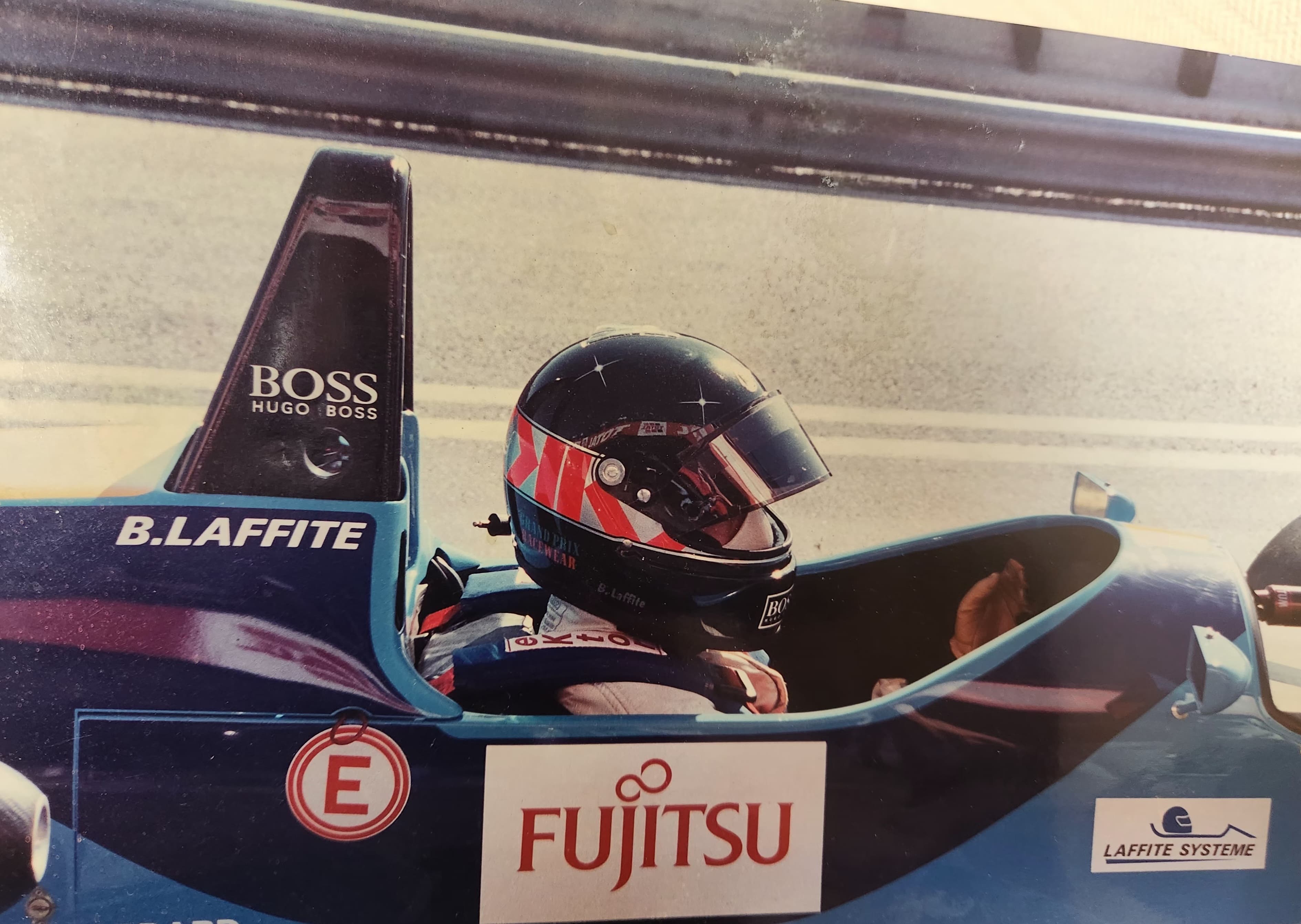
Competition arrived late, and fast. His first race was at Montlhéry in 1990, aged twenty, in a Lotus Seven: pole position on his very first race weekend. Jean Todt, then at Peugeot, was there, and offered him a drive in the European Rallycross Championship in a Peugeot 205 T16. Formule Ford, Formule Renault and Formule 3 followed, with several wins along the way. For ten years he ranked among the six best drivers of his generation, alongside Anthony Beltoise, who started at the same time.
The door that closed
Then a French statute settled the question. The loi Évin, passed on 10 January 1991, banned tobacco advertising; enforced against motorsport from 1993, it drained the funding out of an entire national pipeline, and the collapse had fully arrived by 1994. A whole generation of French drivers never reached Formula 1. For close to a decade, France was represented there by Jean Alesi, already established, and Olivier Panis, who came through the Elf programme.
Bruno Laffite was slightly younger, and the door shut just in front of him. He went to the United States to try IndyCar, a discipline every bit as expensive, did some Formula 1 testing, and there it stopped. That kind of fork ends many careers. In his case it mostly exposed a capacity to change ground without changing method.
What a driver really learns is not how to go fast. It is how to keep going once the ideal line has vanished.
The return to cars
At twenty-five he opened leisure karting circuits in Paris and Dijon, and ran them for ten years. Then, around the birth of his daughters (today twenty-one), he moved to Orlando, Florida, working in house construction and renovation until roughly the age of forty-five. Later he renovated houses near Monaco. There, a few kilometres from the most famous circuit in the world, he decided to go back to cars.
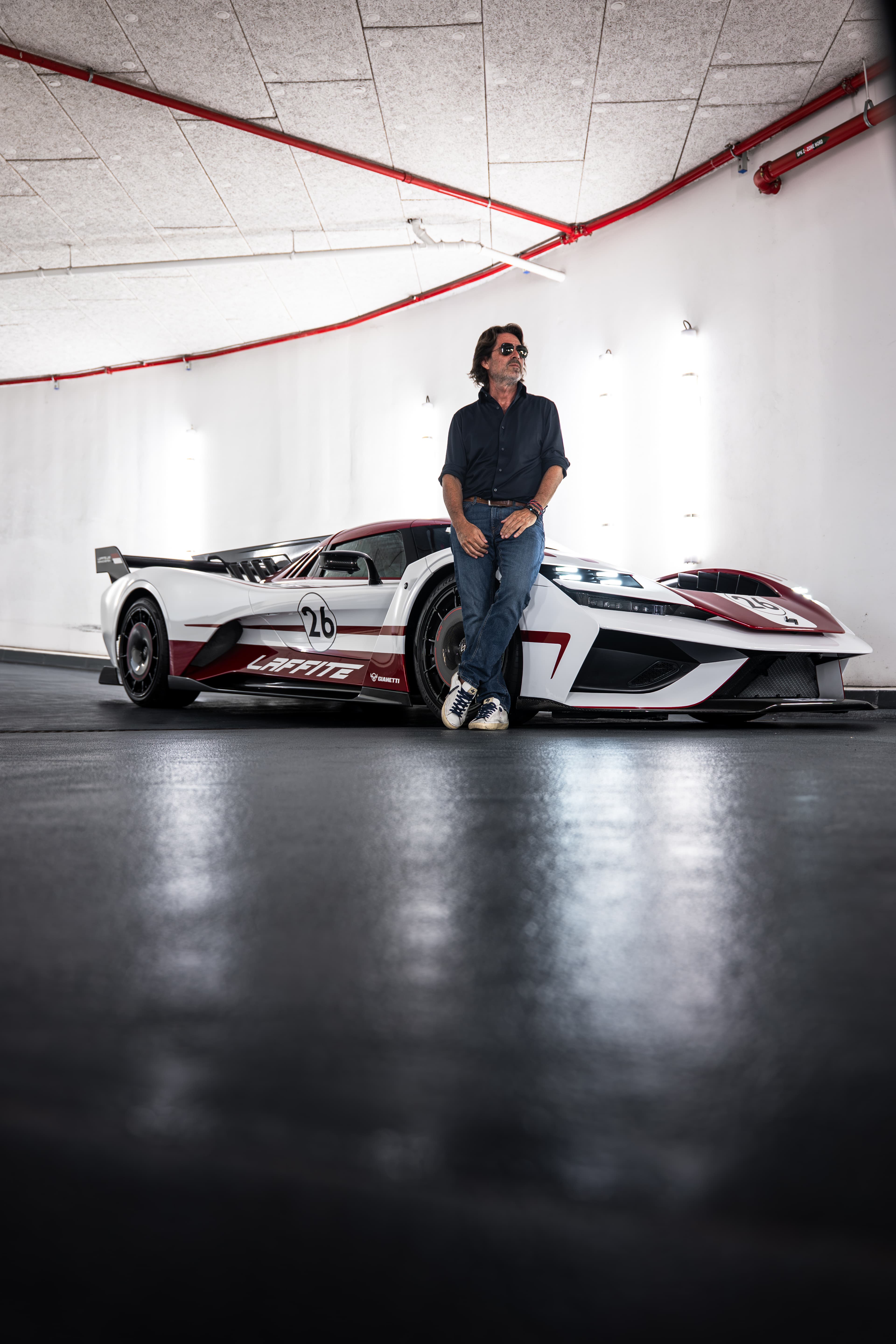
The project began in 2014 around an idea that is easy to state and hard to deliver: a race car homologated for the road. A large 4x4, a first car built, then eight hard years. In 2022 he reconnected with Pascal Cohen, and together they built Laffite Automobili, based in Turin. The design was entrusted to Giorgetto Giugiaro, named Car Designer of the Century in 1999. The LM1, its initials pointing to Le Mans, is a street-legal hypercar of more than 1,000 hp, limited to twenty-four units.
The thread runs unbroken: the same demand applied to a keyboard, a racket, a steering wheel, then a company. This is not a career change. It is a continuity.
Invite Bruno Laffite to tell the behind-the-scenes at your event.