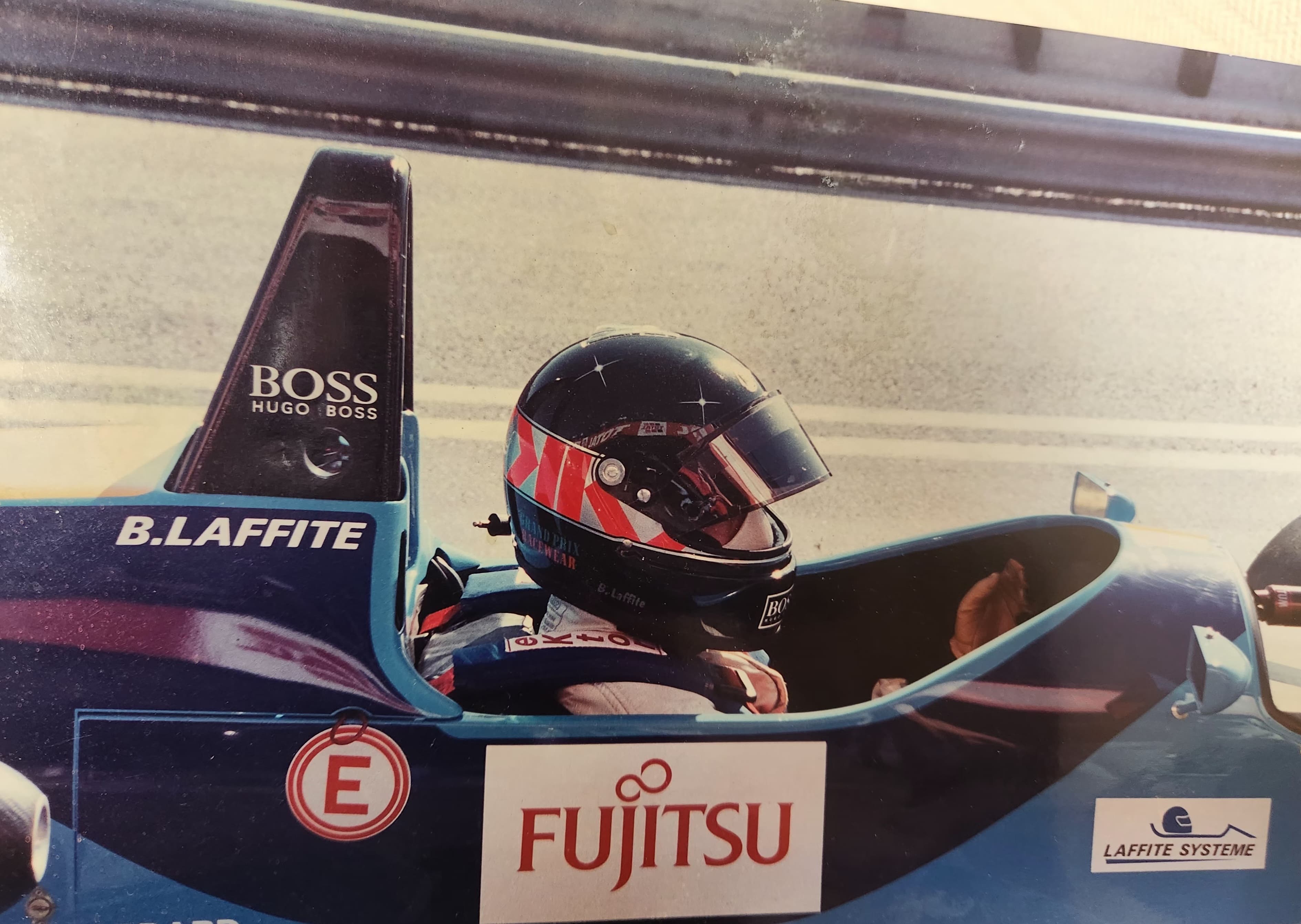
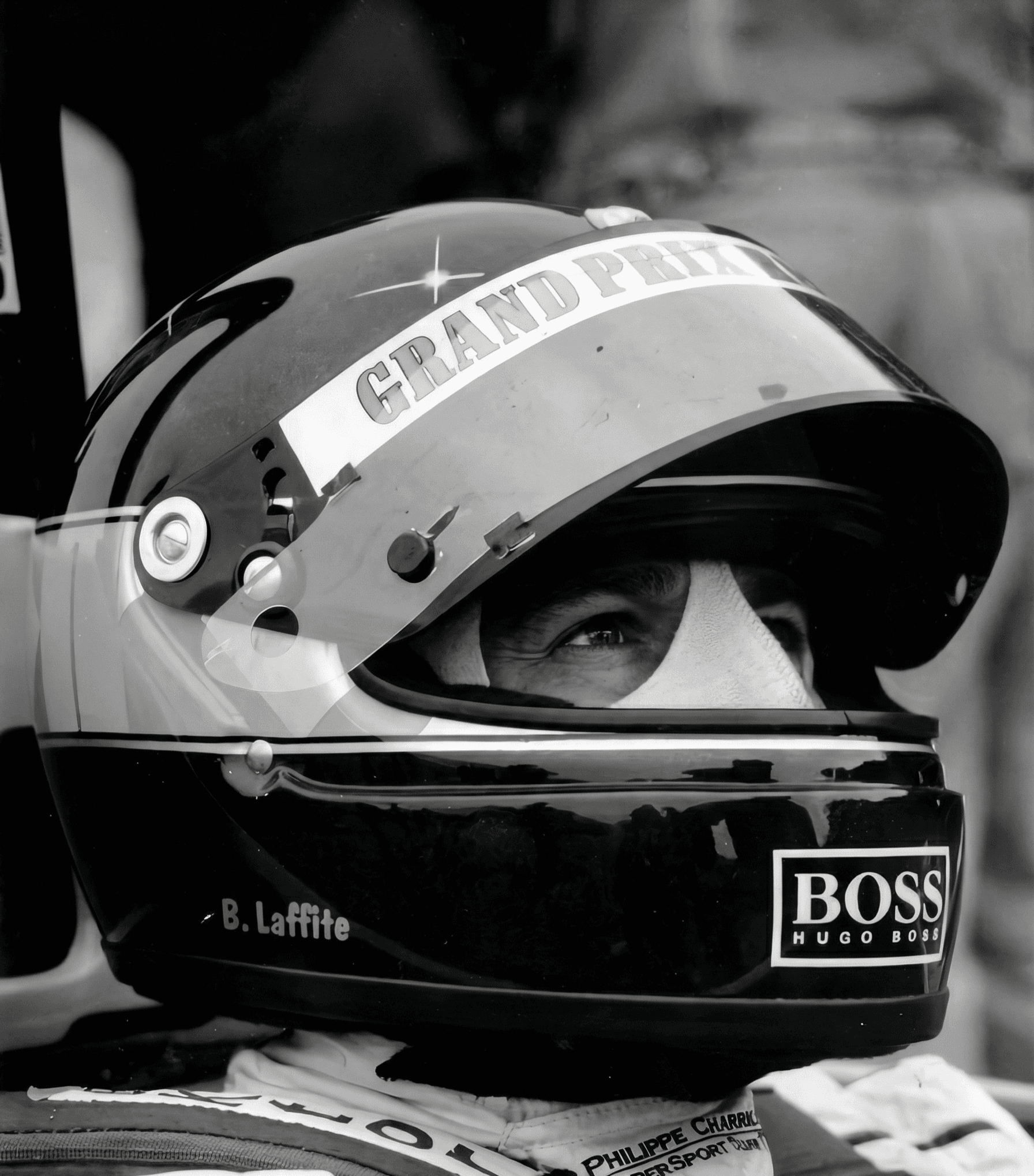
Dominique Laffite: the dealership, the workshop and the Monte-Carlo
Bruno Laffite's father sold cars in Paris and entered a small rally team in the Monte-Carlo. A different way of loving the motor car: less televised, far closer to the grease.
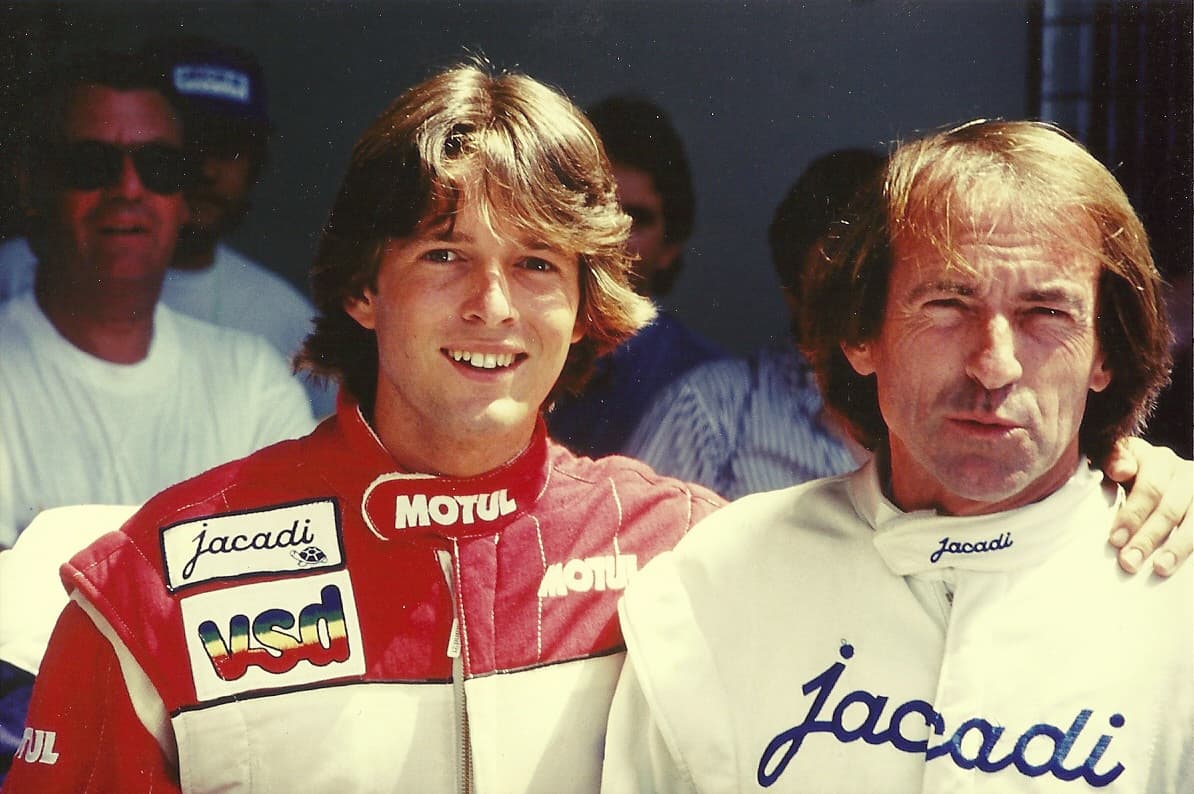
In the Laffite family there was the uncle France watched on television, and there was the father, who sold cars in Paris. Two ways of belonging to the same world.
Dominique Laffite was a car dealer in the capital. That was his trade, his working day, his living: the motor car as a commercial object before it was ever an object of desire. He was also the brother of Jacques Laffite, a Formula 1 driver from 1974 to 1986. The gap between the two men was not a gap in passion. It was a gap in where they stood inside the sport.
The dealership
A child raised around a car dealership does not learn cars through myth. He learns them through stock, deliveries, customers to be persuaded, trade-ins to be negotiated, the workshop at the back of the yard. He watches mechanics spend hours on parts nobody will ever notice. He grasps early that a car is first an assembly of components, costs and deadlines, and that beauty arrives afterwards.
It is an education that inoculates against illusions. Bruno Laffite grew up with the double lesson: a car can be an emotion, but it remains a business. Fifty years later, when an industrial project had to be held together through eight hard years before Laffite Automobili properly existed, that training would count for more than any memory of a podium.
The small rally team
Dominique Laffite did not confine himself to selling, however. He put together a small rally team, entered in the Rallye Monte-Carlo. It is worth measuring what that involves. The Monte-Carlo is no club event: it is one of the most punishing rallies on the calendar, a winter contest where the mountain passes are won on tyre choice as much as on driving.
Entering a team at that level means finding a budget, gathering mechanics, preparing a car, running the logistics, and absorbing the retirements. Rallying, unlike a Grand Prix, does not unfold inside a clean, enclosed arena. It runs at night, through rain and snow, well away from the cameras, and it gets repaired at the side of the road.
There are those who watch the cars go by, and those who know what it takes to get them to the start.
Two ways of loving cars
Bruno Laffite's childhood played out precisely between these two registers. On one side, the uncle in Formula 1, the sport in its most visible form: television, Grands Prix broadcast in France from 1976, the light. On the other, the father, who took him to the starts of the Rallye Monte-Carlo and the Paris-Dakar, and to one or two Grands Prix a year, in the flesh and at full volume.
That education was not symmetrical, and that is what made it valuable. The paddock manufactures desire; the workshop manufactures realism. A child who had known only the television would have dreamed of a career. A child who saw both understands that a career is a project to be funded, prepared and defended, season after season.
What came next carried the mark of it. When the French motorsport pipeline collapsed in the early 1990s, Bruno Laffite did not stop working: he opened karting circuits, then built and renovated houses in Florida and later near Monaco, before returning to cars through the industrial door rather than the driver's. His father, one suspects, had shown him the way without ever delivering a lecture.
Invite Bruno Laffite to tell the behind-the-scenes at your event.