1976: six years old, a television set and an uncle in Formula 1
French television starts broadcasting Grands Prix. Bruno Laffite is six, and the driver on the screen shares his surname. Anatomy of a passion that settles in for life.
In 1976, Grands Prix entered French homes through the television set. Bruno Laffite was six. The driver he watched was called Jacques Laffite, and he was his uncle.
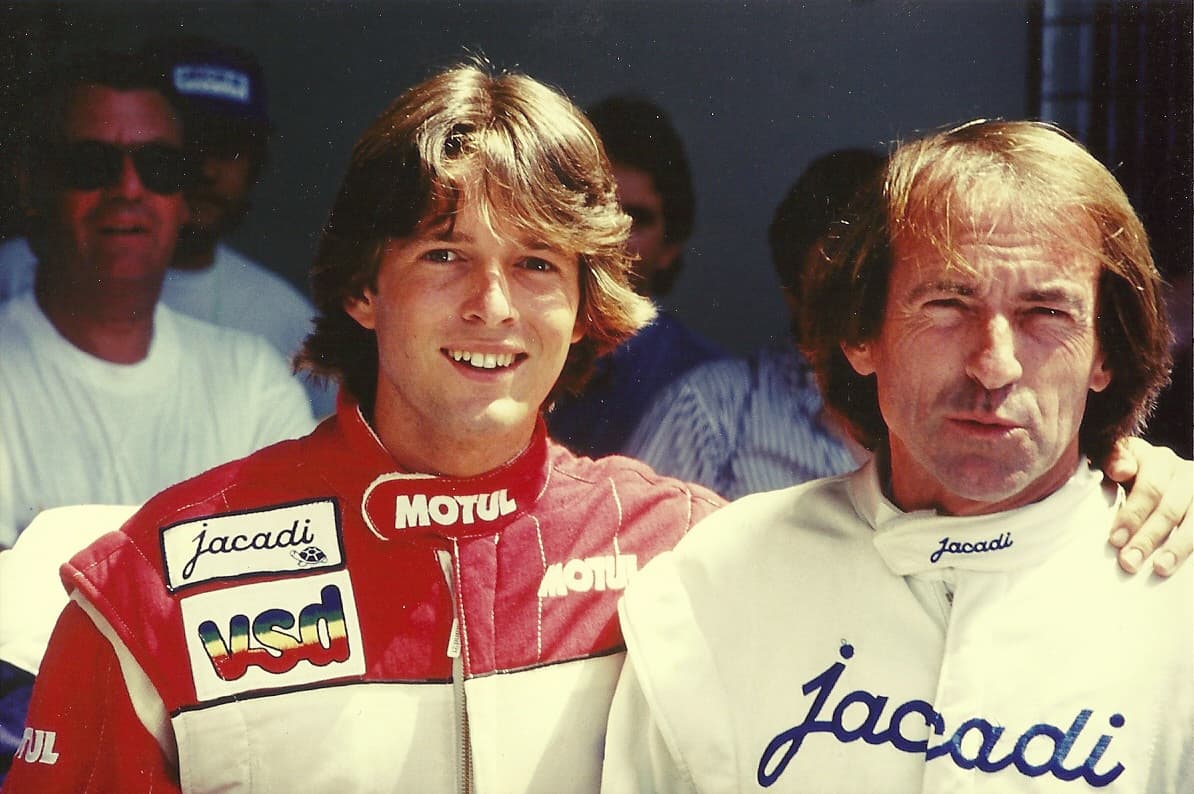
It is worth picturing what that means to a child of that age. Formula 1 was then a distant, deafening sport, contested in countries whose names he could barely place. Suddenly it was visible, every other weekend, in the family living room. And by an accident of birth it was not populated by strangers: one of the faces belonged to a man he met away from the screen.
The year 1976
The mechanism is simple and formidably effective. A six-year-old does not yet follow race strategy, set-up choices or lap-time deltas. He takes in something else: the noise, the colours, the tension of a start, and above all the direct line between that spectacle and his own life. The most unreachable sport in the world becomes, in his mind, something his family does.
That same year he took up the piano, and has never stopped playing since. Two parallel apprenticeships began at once: patient repetition at the keyboard, and an appetite for speed in front of the screen. They would never contradict each other. They would compound.
One or two Grands Prix a year
Television alone, though, does not make a driver. The decisive part came from physical experience. His father, Dominique Laffite, a Paris car dealer, took him to one or two Grands Prix a year. The difference from the screen is absolute.
A 1970s Formula 1 engine is not heard, it is received. The sound goes through the body before it reaches the ear. Then the smell, fuel and hot brakes, which lodges in the memory for good. Then real speed, nothing like the television framing that flattens a corner and makes the car look almost slow. At trackside, it passes and you have seen nothing.
There is also a geography no broadcast conveys. A circuit is not flat: it climbs, it drops, it tilts away beneath you. The pits smell of solvent, mechanics work standing up in the noise, drivers cross the crowd like ordinary men. The boy walking beside his father discovers that this world, whatever television suggests, is made of hands, tools and learned gestures.
Nobody chooses speed at six. It chooses you, and you spend the rest of your life organising the consequences.
How an addiction is built
One or two Grands Prix a year is not much, and it is precisely the right dose. Scarcity sets the value. Between visits the child lives on anticipation, on television, on family talk and magazines. The paddock becomes a place you earn rather than a backdrop you consume.
The rest of the time he was elsewhere, and that detail matters. He grew up at a tennis club, which he himself calls the family's country house, playing there until he was eighteen and becoming champion of the Val-de-Marne. Competition, in other words, was learned somewhere other than in a car: in a demanding individual sport won by reading the game and by sheer consistency.
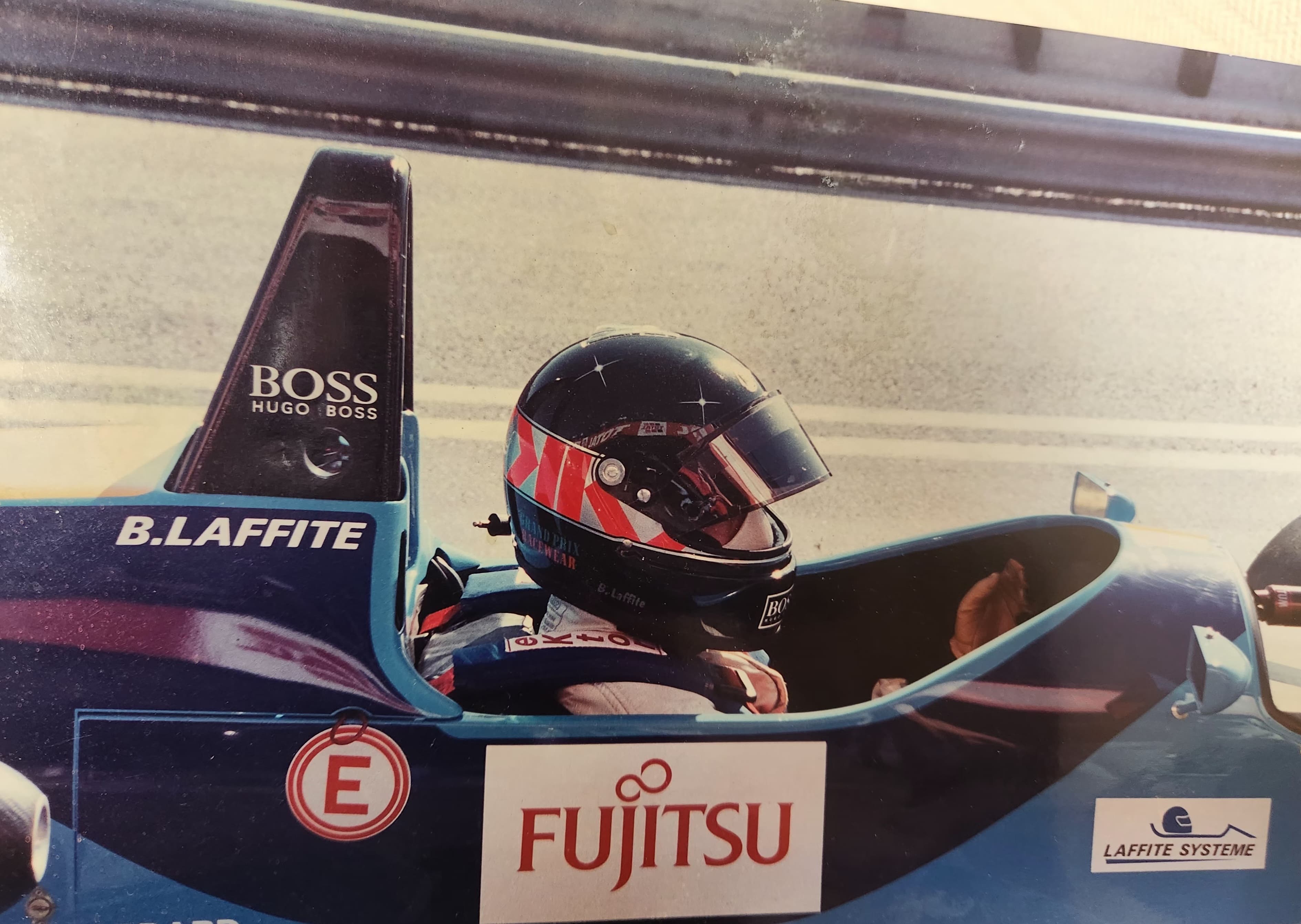
The result of that upbringing would only show up much later. Bruno Laffite did not sit in a racing car until he was twenty, at Montlhéry in 1990, in a Lotus Seven. He took pole position on his very first race weekend. That was not a miracle. It was the yield of fourteen years of watching. He had looked, listened, smelled and waited. All that remained was to drive.
Invite Bruno Laffite to tell the behind-the-scenes at your event.