Karting in Paris and Dijon: ten years on the other side of the wheel
At twenty-five, Bruno Laffite stopped racing in order to let other people race. Ten years running karting circuits became the business school he never attended.
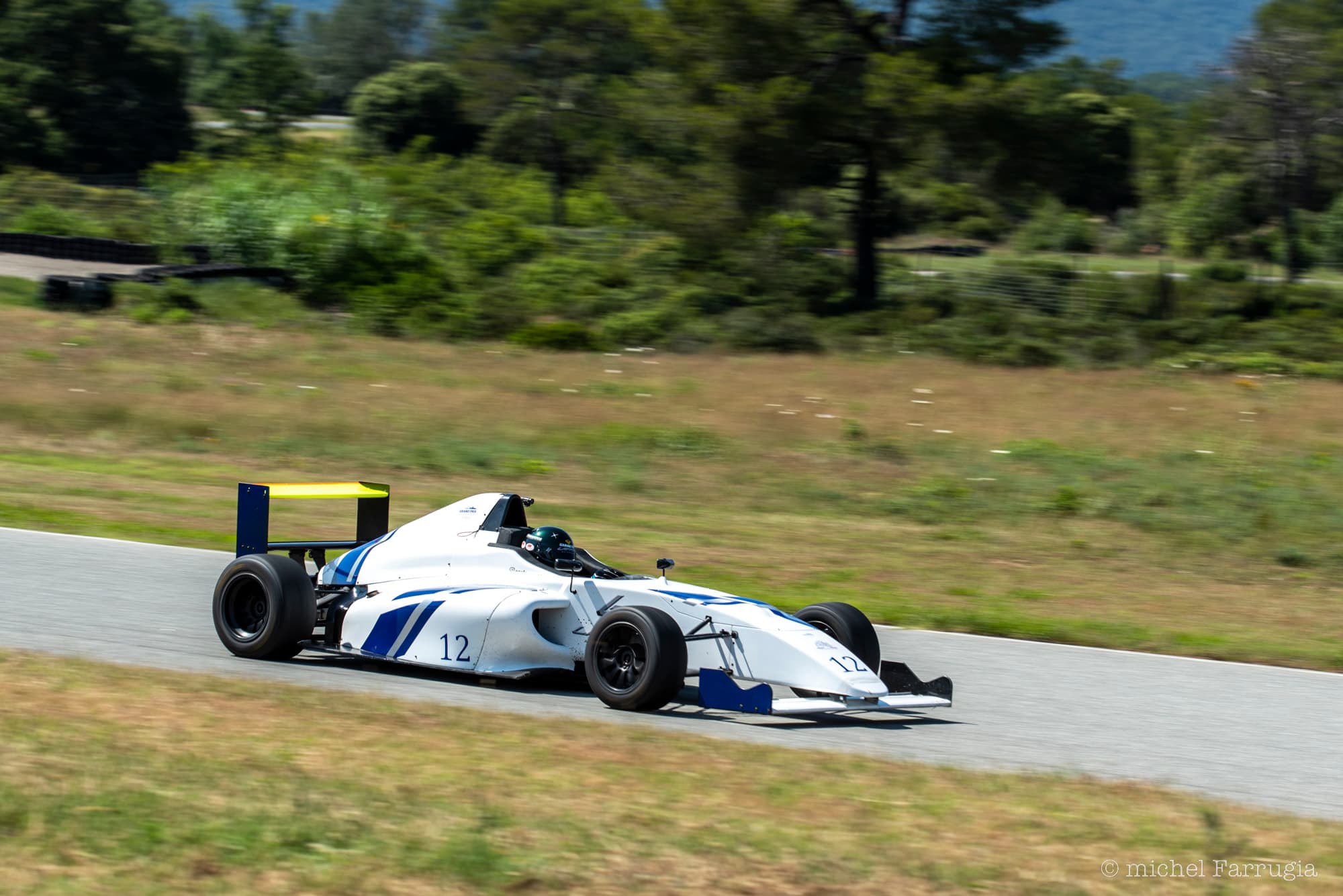
At twenty-five, Bruno Laffite made a move few racing drivers ever accept: he stopped competing in order to let other people compete, opening leisure karting circuits in Paris and then in Dijon.
Switching sides
The early nineties had closed a door. The loi Évin, passed on 10 January 1991 and enforced against motorsport from 1993, drained French budgets within two seasons. By 1994 the ladder that ran from Formule Ford through Formule Renault and Formula 3 towards Formula 1 no longer led anywhere. For ten years Bruno Laffite had been counted among the six best drivers of his generation. Now he had to invent something else.
What he came up with was not a consolation prize but a change of position. Rather than chase a seat at any cost, he chose to bring the track to where the public already was: in the heart of Paris first, then in Dijon. Leisure karting is not competition, but it keeps the essentials, the stopwatch, the racing line, the sensation of an engine sitting behind your back. He became an operator.
A business school with real customers
What the circuits taught him in those years, no classroom would have taught him half as fast. A karting centre is a workshop and a retail business at the same time. The machines have to run every single day, which means tyres, brakes, rebuilt engines, spare parts on the shelf. It means staff: mechanics, marshals, front desk, group supervision. And it means safety, which tolerates no shortcuts when untrained customers are strapped into something quick.
Above all it means learning seasonality. A circuit lives by school holidays, corporate evenings, the weather and the run of public holidays. A rainy Saturday is never recovered. Ten years of that shape a company director more reliably than most degrees: cash flow, payroll, customer relations, maintenance schedules, legal liability. Bruno Laffite learned the trade from the bottom, in the noise and the oil.
Running a circuit is not selling speed: it is selling an evening that works, and answering for everything that surrounds it.
There was a reversal of posture, too. A driver is the one who is waited for, timed and judged. An operator is the one who does the waiting, who unlocks the doors in the morning and locks them again at night, and whose work goes unnoticed precisely when it is done well. That shift from the spotlight to the organisation may well be the real hinge of his working life.
Weariness, and what came next
Ten years is a long time in a business built on repetition. The days start to resemble one another, and so do the problems. He grew tired of it, without drama and without failure: the model worked, it simply stopped calling to him. Nothing in leisure karting can hold someone who has raced in Formula 3 and tested a Formula 1 car.
So he turned the page towards another continent and another trade, building and renovating houses in Florida. But the circuit years were never wasted. They gave him what enthusiasts turned entrepreneurs most often lack: a concrete sense of what a company costs to run, day after day, season after season. Two decades later, when the task became founding a car manufacturer in Turin, that apprenticeship would count for as much as the helmet.
Invite Bruno Laffite to tell the behind-the-scenes at your event.